
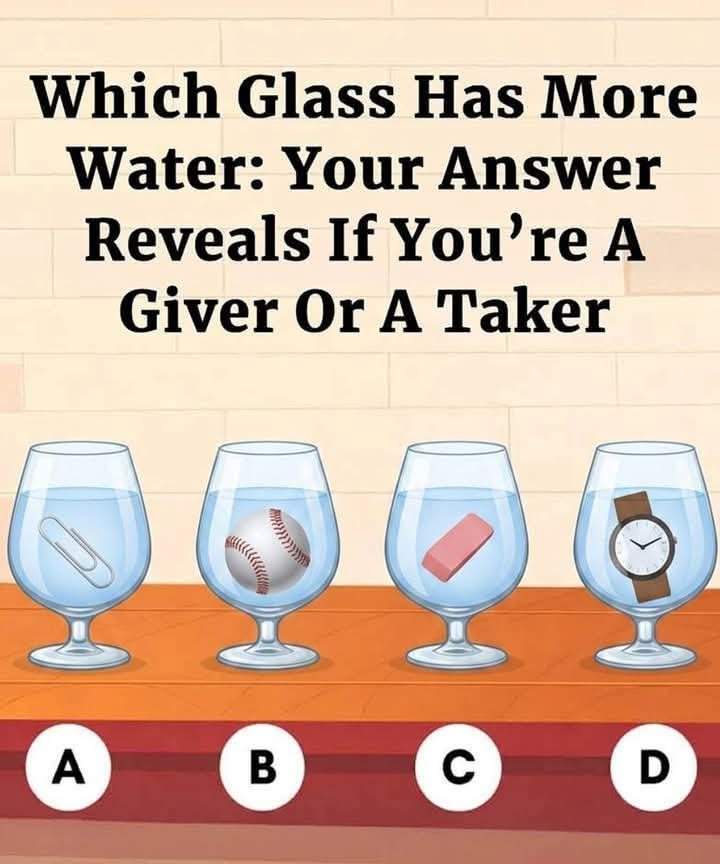
Which Glass Has More Water? Your Answer Reveals If You’re a Giver or a Taker
When contemplating the age-old question of “which glass has more water?”, the implications stretch far beyond mere measurements. This seemingly simple dilemma can reveal aspects of your personality, particularly whether you identify more as a giver or a taker. Understanding these distinctions not only enriches your self-awareness but can also have profound implications for your personal relationships and life satisfaction. In this article, we will delve into the psychology behind this question, the importance of perspective in measurements, and how you can apply these concepts in your daily life.
The Setup: The Glass Dilemma
Imagine two glasses placed side by side. One is tall and narrow, while the other is short and wide. Given this scenario, which glass do you perceive to contain more water? On one hand, the tall glass appears to hold more, based on its height. On the other hand, the wide glass might seem to have a larger volume because of its breadth. This visual perception pits your instinctual judgments against factual measurements.
Givers vs. Takers
The crucial distinction arises when we consider the terms “giver” and “taker.” In psychological terms, givers are often characterized by their desire to support others and share resources. They are inclined to view the world from a perspective grounded in empathy and inclusiveness. Conversely, takers tend to prioritize their own needs and desires over those of others, focusing on maximizing their own benefit.
The Psychological Insight
When determining which glass holds more water, givers and takers may approach the problem from different angles.
– Givers: They might focus on the broader context of the scenario. A giver may ask themselves questions like, “How could each glass benefit others?” This mindset often leads givers to consider the implications of their choice and to lean toward a more empathetic interpretation.
– Takers: A taker, on the other hand, might focus solely on what serves them best, perhaps gravitating toward the glass that visually appears to hold more or suits their immediate desires. They may prioritize the quantity without weighing potential consequences for others involved.
Understanding this psychological framework can help individuals recognize not only their own tendencies but also those of people around them.
Why the Glass Matters: Measurement and Perspective
The question of “which glass has more water” serves as a metaphor for various dynamics in life. Just as this simple assessment can lead you to greater insights about yourself, it encourages deeper contemplation on how people’s perspectives vary when assessing value, whether it’s in relationships, finance, or collaboration.
The Role of Context
When assessing value, context becomes crucial. In many real-life scenarios, the glass metaphor exemplifies how individuals value tangible resources (time, energy, money) differently. For instance, if someone is resourceful, they might see opportunities where others see obstacles, just as a generous person sees possibilities in the shorter, broader glass.
Practical Applications: Giver or Taker in Daily Life
The exploration of this concept can lead to actionable change in your daily interactions. Here’s how you can harness your understanding of givers and takers to improve your relationships and overall well-being.
1. Self-Reflection and Awareness
Take time to reflect on your interactions within personal and professional settings. Ask yourself:
– Do you often prioritize your needs over those of others?
– Are you quick to share resources, time, or assistance?
Increasing self-awareness can pave the way to personal growth.
2. Embrace Empathy
Givers often excel in areas requiring collaboration. Practicing empathy can help reshape your approach in various spheres of life. Consider how your decisions impact others. The ability to empathize is central to building meaningful relationships, whether through friendships, family ties, or work alliances.
3. Balance is Key
While embracing the giver mindset can be rewarding, maintaining a balance is crucial. It’s important to acknowledge your needs and ensure you’re not depleting your resources for others at the cost of your well-being.
4. Assess Your Environment
Look around you. Are you surrounded by givers or takers? The environment you immerse yourself in can significantly influence your mindset. Seek relationships that encourage growth, shared experiences, and mutual support.
Conclusion: The Bigger Picture
The question of “which glass has more water?” is more than a mere observation—it’s a reflection of our mindset and values. Recognizing whether you lean more toward being a giver or a taker can empower you to make meaningful changes in your life. While it’s natural for individuals to oscillate between the two extremes at various times, understanding where you stand can guide your actions and decisions, improving your relationships and fostering greater satisfaction.
Ultimately, the next time you encounter this optical illusion in life, remember to look beyond the surface. Embrace the lessons that come from seeing the world through the lenses of both perspective and empathy, as these are the cornerstones of lasting connections—one that results in richer experiences for everyone involved.