
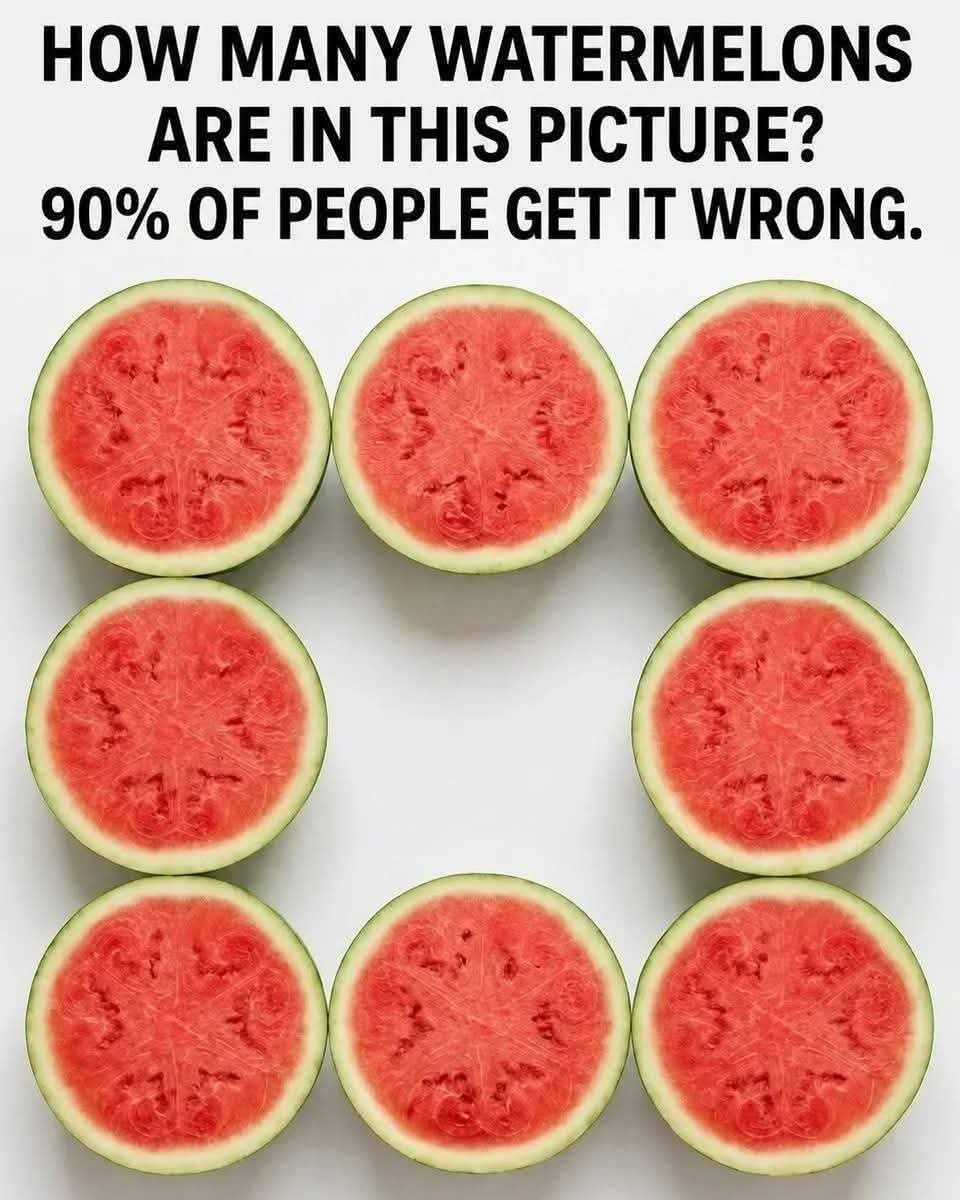
# How Many Watermelons Are In This Picture? 90% OF PEOPLE GET IT WRONG
Have you ever come across a riddle or visual quiz that left you scratching your head? One such puzzle that has captured the attention of millions involves counting watermelons in a seemingly simple image. In this article, we will explore the phenomenon surrounding this adorable challenge, dive into the psychology of why most get it wrong, and even share tips to enhance your visual perception skills. Get ready to boost your cognitive abilities and discover why this playful exercise has become a social media sensation.
## The Challenge: Counting Watermelons
Imagine a vibrant image filled with luscious, ripe watermelons in various sizes and shades of green. Your task is to count how many watermelons you see. It seems straightforward, right? However, studies have shown that approximately 90% of people fail to arrive at the correct answer. This discrepancy piques curiosity and begs the question: why?
Visual puzzles like this one engage not just our analytical prowess but also our instinctual perceptions. Engaging in such exercises not only entertains us but can also be a means to sharpen our cognitive abilities. Moreover, screen time among social media users has enabled these challenges to go viral, bringing together friends and families for some fun competition.
## Understanding the Psychology Behind Visual Perception
So, what is it that makes counting watermelons so tricky? Several factors contribute to this phenomenon:
### 1. Cognitive Overload
When confronted with a multitude of objects, our brains can quickly become overloaded with information. Instead of focusing solely on the task at hand, such as counting, we may find ourselves distracted by the vibrant colors and various shapes. This cognitive overload can lead to errors and miscounting.
### 2. Expectation Bias
People often have preconceived notions about how many watermelons they might expect to see based on their past experiences. This bias can skew their counting and perception. For example, if you assume there will be around five watermelons, you might only count those that catch your eye, leading to a discrepancy in the actual total.
### 3. Ingroup and Outgroup Dynamics
Social influences play a significant role in how we process visual information. When sharing the image among friends or family, group think can emerge. If someone claims there are seven watermelons, others may be swayed by that assertion even if they initially counted differently. This social conformity can impact individual results.
## How to Improve Your Visual Counting Skills
If you find that counting watermelons (or any similar challenge) proves difficult, you don’t have to resign yourself to being among the 90% who get it wrong. Here are some tips to enhance your visual counting abilities:
### 1. Focus on One Object at a Time
Instead of trying to count all the watermelons simultaneously, consider counting one specific watermelon before moving on to the next. This strategy can help alleviate cognitive overload and provide clarity.
### 2. Use a Finger or Pointer
Using your finger or a pointer can assist in tracking the items as you count. Pointing at each watermelon as you count helps keep your attention concentrated and minimizes the opportunities for miscounts.
### 3. Break It Down
If the image is filled with multiple objects, break the visual into smaller sections. Count the watermelons in one section before moving on to the next. By segmenting the task, you can reduce information overload.
### 4. Practice with Similar Challenges
Engaging in more visual perception challenges can help. Search for similar puzzles or riddles online that test your counting skills and improve your cognitive flexibility.
## The Viral Nature of Counting Challenges
In our digital age, sharing challenges on platforms such as Instagram, TikTok, or Facebook has become a prominent trend. The allure of these counting puzzles lies in their ability to ignite conversation and debate among families, friends, and even strangers. Not only do they serve as entertaining distractions, but they also provide an opportunity for social bonding.
These challenges often lead others to ask, “How many did you see?” or “Did you get it right?” This communal engagement makes such challenges viral as people share results, opinions, and even errors that lead to good-hearted banter.
## Fun Facts About Watermelons
While watermelons are often part of playful challenges, they are also fascinating in their own right. Here are some fun facts:
– **Watermelon Varieties**: There are over 1,200 different types of watermelons grown worldwide. Colors can range from the classic red to yellow and even white.
– **Hydration Hero**: Composed of over 90% water, watermelons are perfect for hydration during hot summers, making them a popular choice in warm climates.
– **Seedless Wonder**: Seedless watermelons are not genetically modified; they are produced by hybridizing different watermelon species.
– **Cultural Significance**: In some cultures, watermelons symbolize friendship and prosperity, making them a popular gift during gatherings.
## Conclusion
The challenge of determining “How Many Watermelons Are In This Picture?” captivates millions, revealing fascinating insights into human cognitive abilities and group dynamics. While 90% of people may struggle with this visual puzzle, it serves as a fun exercise to enhance counting and observation skills.
So the next time you encounter a counting challenge, remember these tips to improve your accuracy. Allow the counting of watermelons to spark conversations with friends and family and enjoy the lighthearted competition. Embrace the challenge, and who knows—you might just find yourself part of the 10% who get it right!