
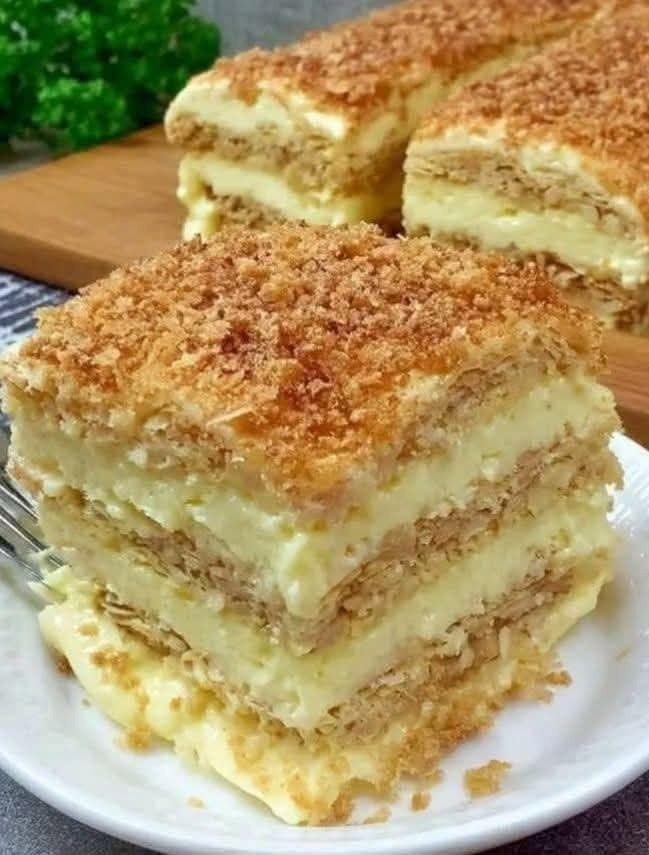
Crispy Custard Layered Pastry: A Complete Guide to Making This Irresistible Dessert at Home
Few desserts combine texture and flavor as beautifully as a crispy custard layered pastry. Picture thin, golden sheets of pastry stacked high, each layer shattering delicately under your fork, revealing a silky, vanilla-scented custard cream at the center. Whether you are planning a dinner party, looking for a standout bakery-style treat, or simply craving something indulgent, this dessert deserves a place in your recipe collection.
In this guide, you will learn what makes a crispy custard layered pastry special, which ingredients matter most, how to prepare each component step by step, and how to troubleshoot common problems. By the end, you will have everything you need to bake a show-stopping dessert with confidence.
What Is a Crispy Custard Layered Pastry?
A crispy custard layered pastry is a dessert built from alternating layers of crisp, flaky pastry and smooth, thick custard. The pastry is typically baked until deeply golden and brittle, while the custard is cooked on the stovetop or in the oven until it sets into a sliceable, creamy filling. The contrast between crunchy and soft is what makes this dessert so satisfying.
Variations of this dessert appear in bakeries and home kitchens around the world. Some versions use puff pastry, others rely on phyllo or filo dough, and some use a sturdy shortcrust base. Each approach yields a slightly different texture, but the core idea remains the same: crisp layers paired with a rich, velvety custard.
Choosing the Right Ingredients
The quality of your ingredients will directly shape the outcome of your pastry. Here is what you need to focus on for the best results.
Pastry Options
– Puff pastry: Offers the most dramatic rise and flaky layers. Look for all-butter puff pastry for superior flavor.
– Phyllo dough: Produces ultra-thin, shatteringly crisp sheets. Keep it covered with a damp towel while working so it does not dry out.
– Shortcrust pastry: Creates a sturdier, more cookie-like base that holds up well to heavy custard fillings.
Custard Ingredients
– Whole milk or a blend of milk and heavy cream for richness
– Egg yolks, which provide structure and a golden color
– Granulated sugar for sweetness
– Cornstarch to thicken the custard without making it gluey
– Pure vanilla extract or a split vanilla bean for depth of flavor
– Unsalted butter to add silkiness at the end
Using pure vanilla rather than imitation makes a noticeable difference in taste, so it is worth investing in good quality extract.
Step-by-Step Preparation
Step 1: Make the Custard
Start with the custard, since it needs time to cool and set. In a medium saucepan, heat the milk and cream over medium heat until steaming but not boiling. While the milk warms, whisk together the egg yolks, sugar, and cornstarch in a separate bowl until smooth.
Slowly pour a small amount of the warm milk into the yolk mixture while whisking constantly. This tempers the eggs and prevents scrambling. Then pour the mixture back into the saucepan and cook over medium heat, whisking continuously, until the custard thickens enough to coat the back of a spoon. This usually takes about five to eight minutes.
Remove the pan from the heat and stir in the butter and vanilla. Transfer the custard to a clean bowl, cover the surface directly with plastic wrap to prevent a skin from forming, and refrigerate for at least two hours until fully chilled.
Step 2: Prepare the Pastry
Preheat your oven to 200 degrees Celsius, or about 400 degrees Fahrenheit. Lightly grease a rectangular baking dish or line it with parchment paper.
If using puff pastry, roll it out to a thin, even sheet and cut it into pieces that fit your dish. Dock the surface with a fork to prevent large bubbles from forming. Bake the pastry sheets until they are golden brown and crisp, usually 15 to 20 minutes. Let them cool completely on a wire rack before assembling.
If using phyllo, brush each sheet lightly with melted butter and layer them in the dish, usually six to eight sheets for a sturdy base. Bake until golden and crisp.
Step 3: Assemble the Layers
Once the pastry and custard are both cool, begin assembling. Place a single pastry layer in the bottom of your dish, spread a generous, even layer of custard over it, and repeat with a second pastry layer. Finish with a top layer of pastry. Press gently to settle the layers without crushing the pastry.
For the cleanest slices, refrigerate the assembled pastry for at least one hour before cutting. Use a sharp serrated knife and cut with a gentle sawing motion to preserve the layers.
Step 4: Finish and Serve
Dust the top generously with powdered sugar just before serving. For a professional touch, you can drizzle melted chocolate or a fruit coulis over the surface. Fresh berries, a sprig of mint, or a sprinkle of chopped pistachios also add color and visual appeal.
Tips for Perfect Results
– Keep the custard cold before assembly so it does not soften the pastry.
– Bake pastry thoroughly to ensure it stays crisp after the custard is added.
– Avoid overfilling each layer to prevent the pastry from becoming soggy.
– Serve the same day for maximum crispness, or store leftovers in the refrigerator and enjoy within two days.
– Use a light touch when handling phyllo, as it tears easily.
Common Problems and How to Fix Them
The pastry became soggy. This usually happens when the custard was too warm or the pastry was not baked long enough. Next time, bake the pastry until deeply golden and let the cust