
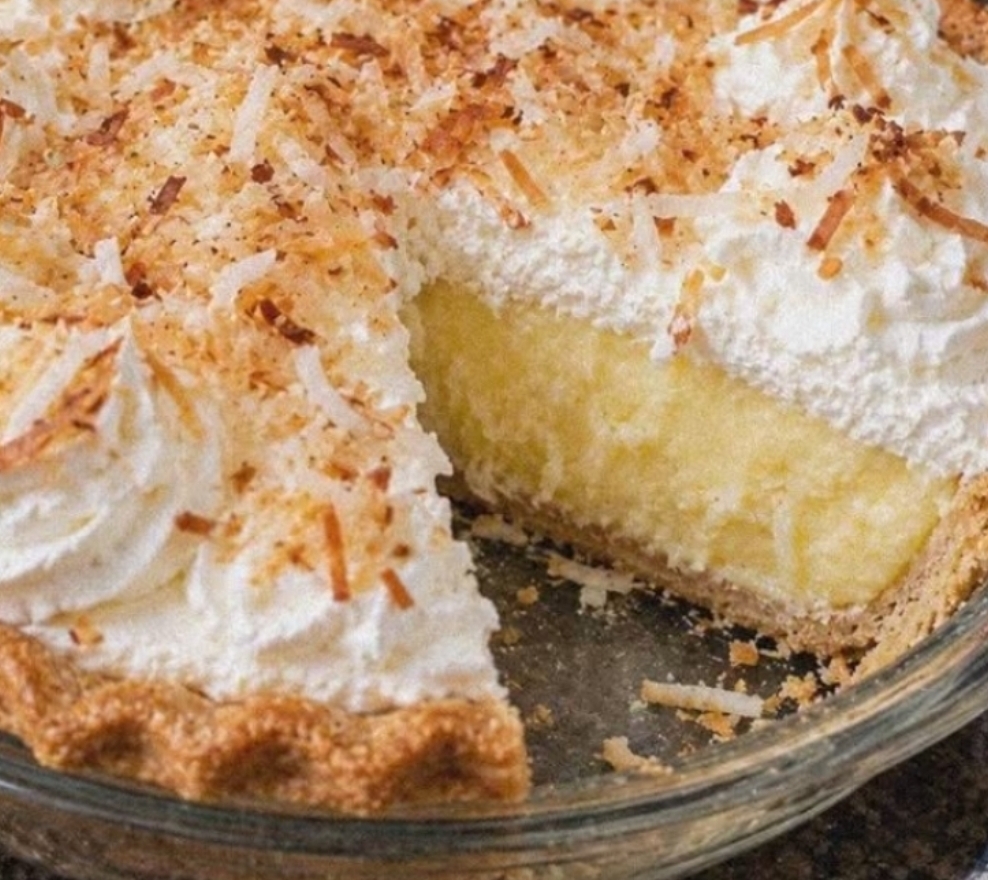
Classic Coconut Cream Pie is a rich, creamy dessert built from three distinct layers: a buttery graham cracker crust, a smooth homemade coconut custard filling, and a generous topping of vanilla whipped cream finished with toasted shredded coconut.The pie combines several textures in every slice. The crust is firm and crumbly, the filling is thick and silky with pieces of sweetened coconut throughout, and the whipped cream adds a light, airy finish. Toasted coconut on top brings extra texture as well as a deeper coconut flavor.This recipe is especially satisfying because each component has a clear purpose. The graham cracker base provides structure, the cornstarch and egg yolks thicken the filling, whole milk keeps the custard creamy, and both vanilla and coconut extract reinforce the flavor without changing the familiar character of the dessert.The pie also benefits from being prepared ahead of time. Once the warm coconut filling is poured into the cooled crust, it needs at least 4 hours in the refrigerator to become fully set. That chilling time allows the filling to firm enough for clean slices while keeping its soft, creamy texture.IngredientsFor the Crust1½ cups graham cracker crumbs¼ cup granulated sugar6 tbsp melted butterFor the Coconut Filling1 cup granulated sugar¼ cup cornstarch¼ tsp salt3 cups whole milk4 large egg yolks1 cup sweetened shredded coconut2 tbsp unsalted butter1 tsp vanilla extract½ tsp coconut extractFor the Topping1 cup heavy whipping cream2 tbsp powdered sugar½ tsp vanilla extract½ cup toasted shredded coconutMethodPreheat the oven to 350°F (175°C).Allow the oven to reach the full temperature before baking the crust. Since the graham cracker base only needs 8–10 minutes in the oven, beginning at the correct temperature helps it firm and lightly toast evenly.Combine the 1½ cups graham cracker crumbs, ¼ cup granulated sugar, and 6 tbsp melted butter.Mix until all of the crumbs are evenly moistened and no large dry areas remain. The mixture should resemble damp, loose crumbs that hold together when pressed.Transfer the mixture to a 9-inch pie dish and press it firmly across the bottom and around the sides. Try to keep the thickness as even as possible so one section of the crust does not become much harder or more fragile than another.Firm pressure is important because the crust needs to support the creamy filling once the pie is chilled and sliced.Bake the crust for 8–10 minutes.The crust should look set and lightly toasted rather than wet or loose. Baking helps the melted butter and sugar bind the crumbs together into a stronger base.Remove the crust from the oven and allow it to cool completely before adding the warm coconut filling.A fully cooled crust gives the pie a more distinct separation between the crumb base and creamy custard.In a saucepan, whisk together the 1 cup granulated sugar, ¼ cup cornstarch, and ¼ tsp salt.Mixing the dry ingredients first helps distribute the cornstarch evenly before liquid is introduced.This is useful because concentrated pockets of cornstarch can create lumps once the filling begins heating and thickening.Gradually whisk in the 3 cups whole milk and 4 large egg yolks until smooth.Add the liquid gradually while whisking so the sugar and cornstarch mixture incorporates evenly.Continue whisking until the mixture has a uniform color and consistency with no visible streaks of egg yolk or dry cornstarch.This smooth starting mixture is important for creating a custard filling with an even, creamy texture.Cook the mixture over medium heat, stirring constantly, until it thickens and begins to gently bubble, about 6–8 minutes.Constant stirring is important because the mixture contains milk, egg yolks, sugar, and cornstarch, all of which can thicken against the bottom of the saucepan as they heat.Keep the mixture moving, especially around the bottom and edges of the pan where thickening tends to happen first.As the filling cooks, it should gradually change from a thin milk mixture into a noticeably thicker custard. By the end of the 6–8 minute window, it should be thick enough to coat the spoon or whisk and should begin producing gentle bubbles.The bubbling should remain controlled rather than becoming a vigorous boil.Remove the saucepan from the heat and immediately stir in the 1 cup sweetened shredded coconut, 2 tbsp unsalted butter, 1 tsp vanilla extract, and ½ tsp coconut extract.Stir until the butter is completely melted and incorporated into the hot custard.The shredded coconut should be distributed evenly so every slice contains small pieces throughout the filling.Vanilla extract rounds out the sweetness, while the coconut extract reinforces the main flavor of the pie.Pour the warm coconut filling into the completely cooled graham cracker crust.Spread the filling gently toward the edges and smooth the surface without disturbing the crust underneath.Place plastic wrap directly against the surface of the filling, then refrigerate the pie for at least 4 hours or until fully set.Keeping the plastic wrap against the surface helps protect the top of the custard while it chills.Do not rush this stage. The filling needs enough time to cool completely and become firm enough to support the whipped cream topping and hold its shape when sliced.Beat the 1 cup heavy whipping cream with the 2 tbsp powdered sugar and ½ tsp vanilla extract until stiff peaks form.The finished whipped cream should be thick enough to hold its shape when the beaters are lifted.Stop once stiff peaks have formed. Continuing to beat unnecessarily can take the cream beyond the light, smooth texture needed for the topping.Spread or pipe the whipped cream over the fully chilled pie.Whether it is spread into soft swirls or piped decoratively, keep the topping distributed across the surface so each slice receives some whipped cream.The pie should already be completely set before this layer is added.Sprinkle the ½ cup toasted shredded coconut generously over the whipped cream.Distribute it across the entire surface rather than concentrating it only in the center.The toasted coconut provides a deeper color and a slightly firmer texture than the coconut inside the custard.Slice and serve the pie chilled.For the cleanest slices, cut through the whipped cream and custard carefully before pressing through the graham cracker crust.Each serving should include all three main layers: crisp crumb crust, creamy coconut filling, and light whipped cream topped with toasted coconut.Why the Graham Cracker Crust WorksThe crust uses only three ingredients, but each one has an important role.Graham cracker crumbs create the structure and characteristic crumbly texture. Granulated sugar adds sweetness and also contributes to the way the crust sets during baking. Melted butter coats the crumbs and helps bind them together.Once baked and cooled, the crust should be firm enough to hold the custard but still tender enough to cut cleanly with a fork.Pressing the Crust EvenlyAn uneven crust can cause problems when the pie is served. Very thick areas may become harder to cut, while very thin areas can break apart when slices are lifted.Press the crumbs firmly across the bottom first, then work them evenly around the sides of the 9-inch pie dish.The aim is a compact layer rather than a loose pile of crumbs.Why the Crust Must Cool CompletelyThe filling is poured in while warm, so beginning with a completely cooled crust gives the base as much stability as possible.A warm crust would be softer and more vulnerable to being disturbed while the filling is spread.Cooling also helps preserve the textural contrast between the firm crumb layer and creamy custard.How Cornstarch Thickens the FillingThe ¼ cup cornstarch is one of the main structural ingredients in the coconut filling.As the milk mixture heats, the cornstarch thickens the liquid into a custard consistency.This is why the recipe instructs you to continue cooking until the mixture both thickens and begins to bubble gently.Without sufficient thickening on the stovetop, the chilled filling may remain softer than intended.Why Egg Yolks Are ImportantThe 4 large egg yolks contribute richness, color, and body to the coconut custard.They work together with the cornstarch rather than replacing it, helping create a filling that feels creamy and substantial.Whisking them smoothly into the milk before cooking prevents visible streaks and helps produce a more consistent texture.The Importance of Constant StirringDuring the 6–8 minutes of cooking over medium heat, constant stirring is one of the most important technique details in the recipe.The filling thickens progressively, and the bottom of the saucepan receives the most direct heat.Stirring keeps the mixture moving so one area does not become excessively thick or stick while the rest remains thin.Once the filling begins to thicken, pay even closer attention because the change can become more noticeable near the end of the cooking window.
Adding Coconut After CookingThe 1 cup sweetened shredded coconut is stirred into the custard after the saucepan is removed from the heat.This keeps the coconut clearly present throughout the finished filling rather than cooking it extensively during the thickening stage.Stir carefully until the shreds are spread throughout the custard so they appear in every portion of the pie.Butter for a Smooth FinishThe 2 tbsp unsalted butter melt into the hot custard and contribute additional richness.Because the filling is still very warm when the butter is added, it should melt naturally as the mixture is stirred.Continue mixing until no separate butter remains visible.Vanilla and Coconut ExtractThe filling uses both 1 tsp vanilla extract and ½ tsp coconut extract.Vanilla provides a warm background flavor, while coconut extract reinforces the shredded coconut already present in the custard.The two extracts complement one another rather than competing for attention.Why the Filling Needs at Least 4 Hours to ChillRefrigeration is not simply for making the pie cold. It is an essential part of creating the final texture.The hot custard needs time to cool throughout and become firm enough to slice.If the pie is cut before it is fully set, the filling can spread rather than remaining in a clean wedge.Waiting at least 4 hours allows the custard to stabilize and makes the finished pie much easier to serve.Using Plastic Wrap on the SurfaceThe recipe instructs you to cover the surface of the warm filling with plastic wrap before refrigeration.Place the wrap directly against the custard instead of leaving a large air gap above it.This protects the surface during chilling and keeps the top smooth for the whipped cream layer that will be added later.Making Stiff Whipped CreamThe topping combines 1 cup heavy whipping cream, 2 tbsp powdered sugar, and ½ tsp vanilla extract.As the cream is beaten, it gradually becomes thicker and begins holding its shape.Stiff peaks mean that when the beater is lifted, the cream forms a defined peak that remains standing rather than collapsing immediately.This firmness is useful because the whipped cream needs to sit neatly on the chilled custard and support the toasted coconut.Why Powdered Sugar Is Used in the ToppingPowdered sugar dissolves easily into whipped cream because of its very fine texture.The 2 tbsp provide enough sweetness to complement the filling without making the topping overwhelmingly sweet.The custard already contains granulated sugar and sweetened coconut, so the whipped cream acts as a lighter contrast.Spreading Versus PipingThe whipped cream can either be spread or piped over the pie.Spreading creates a softer, more rustic appearance with gentle swirls across the surface.Piping creates a more decorative finish, but either method works because it does not change the flavor or structure of the pie.The important point is to cover the chilled filling evenly.The Toasted Coconut FinishThe final ½ cup toasted shredded coconut gives the pie a distinctive top layer.It provides contrast in both color and texture, with golden toasted pieces sitting against the white whipped cream.The toasted coconut also reinforces the coconut flavor immediately before the creamy filling is reached.Texture From Bottom to TopA well-made slice should have several clearly defined textures.At the bottom is the firm but crumbly graham cracker crust. Above it sits a thick, smooth custard with chewy pieces of shredded coconut. The whipped cream adds a soft, airy layer, while the toasted coconut gives the surface a little additional bite.Those contrasts are part of what makes coconut cream pie so satisfying.Recognizing a Properly Set FillingAfter at least 4 hours in the refrigerator, the filling should be cold and stable enough to hold its shape.When a slice is removed, the custard should remain thick rather than flowing into the empty space.It should still feel creamy when eaten, not stiff or rubbery.Cutting Clean SlicesUse a clean, sharp knife to cut through the whipped cream, coconut filling, and graham cracker crust.Working carefully prevents the soft topping from being pushed excessively into the custard.The crust may offer slightly more resistance than the filling, so use steady pressure as the knife reaches the bottom.Clean cuts also show off the distinct layers more clearly when the pie is placed on a serving plate.
Serving the PieServe Classic Coconut Cream Pie chilled so the custard retains its set texture and the whipped cream remains firm.Each slice should include plenty of toasted coconut on top along with the creamy filling and graham cracker base.Because the pie already contains a rich filling and whipped topping, it does not need complicated additional decoration.Make-Ahead AdvantagesThis dessert is naturally suited to advance preparation because the filling requires at least 4 hours of refrigeration.The cooling period is part of the recipe rather than an inconvenience, making it practical to prepare the pie before it is needed.Once the custard is fully chilled, the whipped cream and toasted coconut complete the dessert.Storage GuidanceBecause the pie contains milk, egg yolks, butter, and whipped cream, it should remain refrigerated when it is not being served.Cover the pie to protect the topping and keep the custard from absorbing odors from other foods in the refrigerator.Keeping it chilled also helps maintain the clean separation between the filling and whipped cream layers.Common Problems to AvoidDo not leave dry pockets in the graham cracker crust mixture.Press the crust evenly into the 9-inch pie dish.Allow the baked crust to cool completely before adding the filling.Whisk the sugar, cornstarch, and salt together before adding the liquid ingredients.Continue stirring constantly while the custard cooks over medium heat.Wait until the mixture thickens and begins to gently bubble before removing it from the heat.Distribute the shredded coconut evenly through the filling.Refrigerate for at least 4 hours so the custard becomes fully set.Do not add the whipped topping until the pie is completely chilled.Stop beating the heavy cream once stiff peaks form.What the Finished Pie Should Look LikeThe crust should form a compact golden-brown base and sides around the filling.The coconut custard should look thick, creamy, and pale, with visible shredded coconut throughout.The whipped cream should sit in a generous white layer over the top, while toasted coconut provides a scattered golden finish.When sliced, the pie should hold a defined wedge rather than collapsing, while the filling remains visibly soft and creamy.Final Flavor ProfileThe finished pie should taste buttery, creamy, sweet, and distinctly coconut-forward.The graham cracker crust adds toasted sweetness, while the custard combines whole milk, egg yolks, butter, vanilla, coconut extract, and shredded coconut into a rich center.The whipped cream lightens each bite, and the toasted coconut contributes a deeper, nuttier coconut character on the surface.Final TakeawayClassic Coconut Cream Pie brings together a baked graham cracker crust, a homemade coconut custard, vanilla whipped cream, and toasted shredded coconut in one layered dessert.The keys to the best result are pressing the crust firmly, cooling it completely, cooking the custard over medium heat while stirring constantly for about 6–8 minutes, chilling the filled pie for at least 4 hours, and waiting until it is fully set before adding the whipped cream.Served chilled, the finished pie offers exactly the contrast a coconut cream dessert should have: a crumbly buttery crust, a smooth and rich coconut filling, a light whipped topping, and toasted coconut in every slice.
I worked nights and nursed my husband through cancer — the week he was declared cancer-free, he asked me for a divorce, but after he walked away, his doctor pulled me aside and said, « There’s something you should know. »