
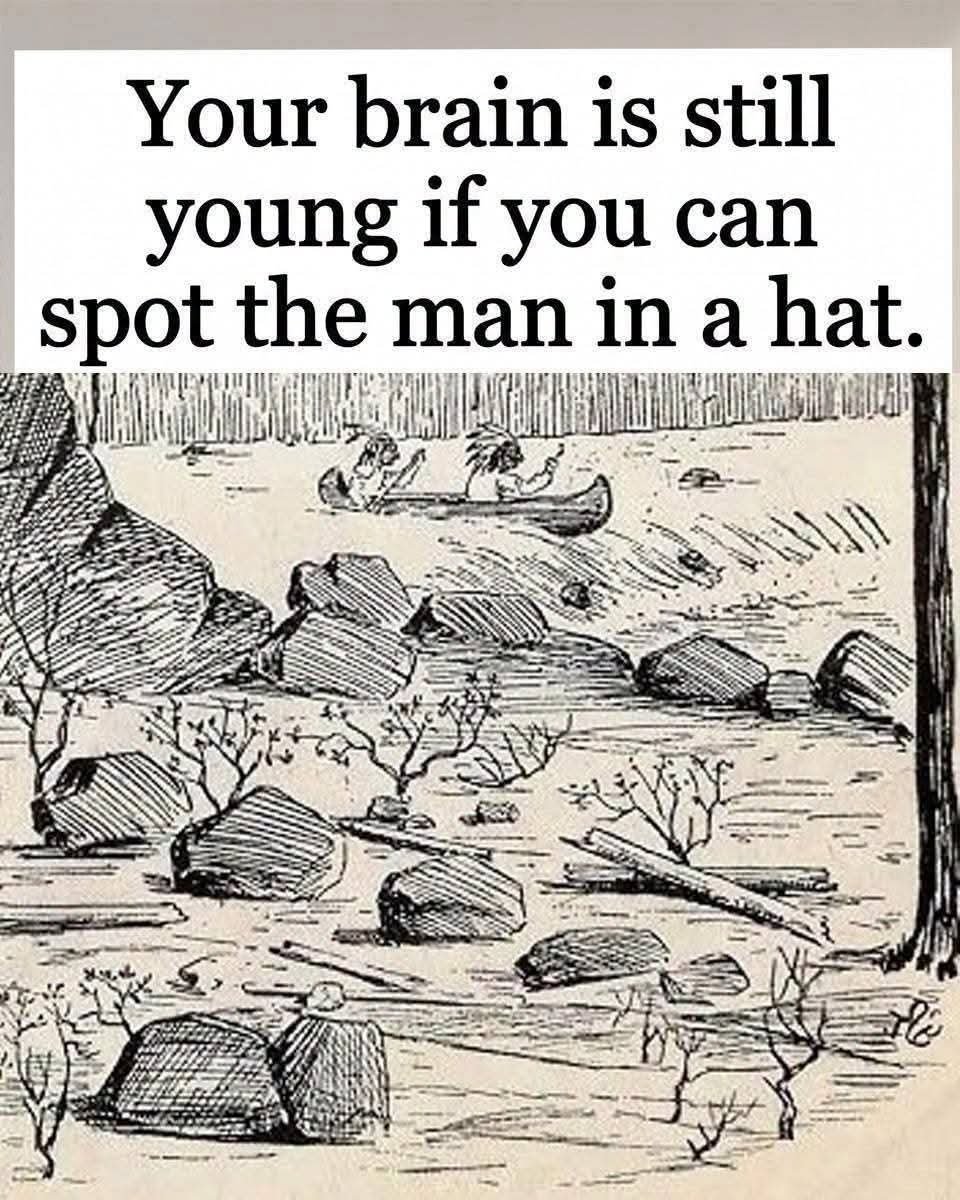
Your Brain Is Still Young If You Can Spot the Man in a Hat
In a world driven by rapid technological advancements and a plethora of visual stimuli, the ability to quickly analyze and interpret what we see has become increasingly important. Recent studies suggest that our cognitive abilities, particularly visual processing, can significantly impact how we perceive our own mental acuity. One fascinating way researchers have explored this concept is through the intriguing visual puzzle known as “the man in a hat.” This article will delve into the implications of such cognitive challenges, how they reflect on our brain health, and various techniques to maintain a youthful mind.
Understanding Cognitive Aging
Cognitive aging refers to the natural decline in cognitive abilities as one ages. This can include memory, problem-solving skills, and processing speeds. Interestingly, engaging in visual puzzles like spotting the man in a hat can stimulate brain activity and potentially delay the effects of cognitive aging.
What is the “Man in a Hat” Challenge?
The “man in a hat” challenge is a fun and engaging visual puzzle that tests your observational skills. The task is straightforward: participants are shown a complex image filled with numerous distractions, and the goal is to find the figure of a man wearing a hat. This seemingly simple exercise can reveal much about the agility and functionality of our brains, including our ability to focus, analyze, and process information quickly.
The Science Behind Visual Puzzles
Research in cognitive psychology has shown that activities which challenge our cognitive function can lead to improved mental sharpness. When you engage in puzzles and games like spotting hidden figures, your brain builds neural pathways. The more pathways you create, the more robust your cognitive functions become. This stimulates the brain’s plasticity, enabling it to adapt and thrive, regardless of age.
Mental Benefits of Engaging with Visual Puzzles
1. Improves Focus and Concentration
In a digital age filled with distractions, maintaining focus is crucial. The act of searching for hidden images helps you train your brain to hone its concentration capabilities. This can improve productivity in daily tasks and your ability to engage with complex information.
2. Enhances Visual Processing Skills
Visual processing is vital to navigating the world around us. Engaging with puzzles enhances your ability to quickly interpret and respond to information presented visually. This skill is invaluable not only in personal settings but also in professional environments where quick decision-making is required.
3. Boosts Memory Retention
Regular engagement with challenging cognitive activities can improve short-term and long-term memory retention. As you practice various types of visual puzzles, your brain learns to categorize and retrieve information more efficiently.
4. Promotes Problem-Solving Abilities
Finding the man in a hat requires analytical skills and lateral thinking. By frequently practicing such puzzles, you develop more effective problem-solving strategies. This is beneficial in both academic and professional contexts, where clear and concise problem-solving is a necessity.
How to Incorporate Visual Puzzles Into Your Routine
1. Online Platforms
The internet is teeming with websites and apps dedicated to cognitive challenges and visual puzzles. Websites like Lumosity and Peak offer tailored activities that require you to spot differences, identify figures, and solve intricate visual problems.
2. Puzzle Books
Consider investing in puzzle books focusing on visual challenges, mazes, or hidden object puzzles. These can be used during your leisure time, whether you are relaxing at home or on the go.
3. Group Activities
Engage friends or family in solving visual puzzles together. This not only makes the activity more enjoyable but also adds a social element that can be great for mental well-being.
Additional Strategies for Maintaining Cognitive Health
1. Stay Physically Active
Exercise is not just beneficial for physical health; it also significantly contributes to cognitive health. Regular physical activity increases blood flow to the brain, which can improve cognitive function and delay aging effects.
2. Eat a Balanced Diet
Incorporating foods rich in omega-3 fatty acids, antioxidants, and vitamins can bolster brain health. Foods such as fish, nuts, berries, and green leafy vegetables are excellent choices that promote cognitive resilience.
3. Prioritize Sleep
Sleep plays a crucial role in memory consolidation and overall cognitive performance. Ensuring you get sufficient, uninterrupted sleep is vital for maintaining mental clarity.
4. Continuous Learning
Keep your brain engaged by continually learning new skills or hobbies. This might include learning a new language, instrument, or even engaging in art. The act of learning stimulates the brain and is essential for maintaining cognitive agility.
Conclusion
Recognizing and embracing the power of visual challenges, such as spotting the man in a hat, can lead to significant cognitive benefits. The ability to engage in these types of puzzles not only reflects a young and agile mind but also provides ample opportunities for cognitive growth and improvement. By incorporating visual puzzles into your routine and adopting additional strategies for cognitive health, you can work towards keeping your brain youthful and vibrant, regardless of your age. So the next time you find yourself pondering the whereabouts of the elusive man in a hat, revel in the knowledge that your brain is still young and thriving.