
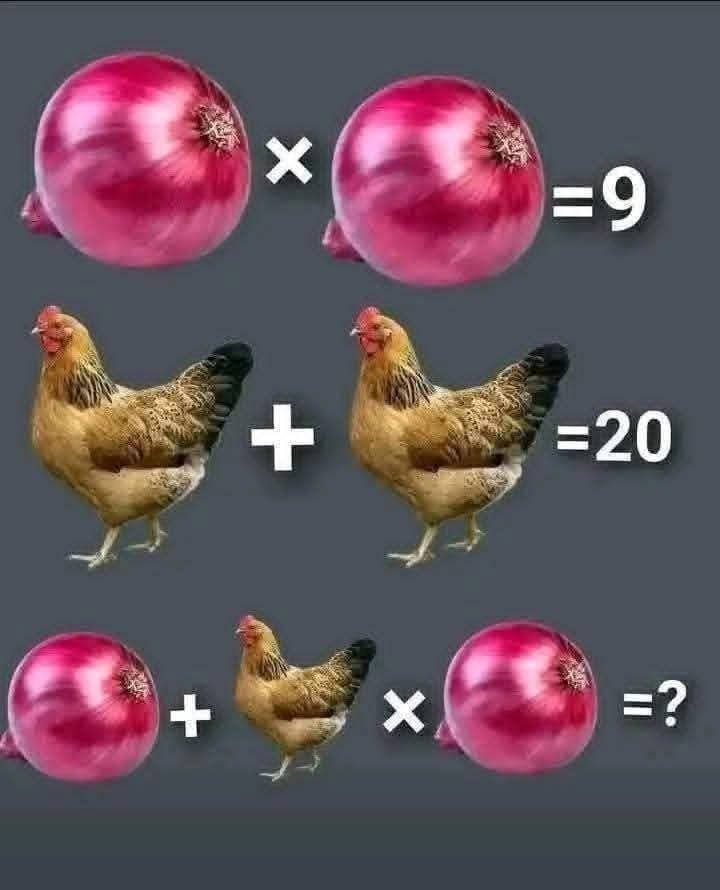
# Search Results for: Only one in ten people can solve this puzzle – can you?
## Introduction
Have you ever come across a brain teaser so challenging that it leaves you scratching your head? Puzzles are not just a fun distraction; they stimulate our minds and can enhance problem-solving skills. Surprisingly, statistics show that only one in ten people can solve certain complex puzzles. So, what’s the challenge behind this particular puzzle, and can you be among the few who successfully crack it? In this article, we will explore various types of puzzles, the psychology behind their difficulty, and tips for improving your puzzle-solving skills.
## Understanding Puzzles: What Makes Them Challenging?
Puzzles come in many forms, from riddles and crosswords to logic puzzles and mathematical conundrums. But what exactly makes a puzzle difficult? Several factors contribute to the challenge:
### 1. The Complexity of Logic
Logic puzzles often require a deep understanding of relationships and patterns. Consider puzzles that require deduction. If you’re unable to grasp the underlying logic, the solution can seem impossible.
### 2. Time Pressure
Many people experience performance anxiety when trying to solve puzzles within a timeframe. This pressure can hinder critical thinking and lead to mistakes.
### 3. Misleading Clues
Sometimes, puzzles include red herrings—misleading information that leads you astray. Identifying which clues are relevant and which are distractions is key to puzzle-solving success.
### 4. Limited Perspective
Each puzzle has a point of view or a set of assumptions. A limited perspective can inhibit your ability to see the solution. Expanding your viewpoint can often reveal the answer.
## The Psychology Behind Puzzles
Understanding the psychological aspects of puzzle-solving can further enhance your skills. Cognitive scientists have explored how our brains handle challenges:
### 1. Cognitive Load Theory
Solving puzzles places varying demands on our working memory, which can affect performance. In simpler terms, the more information your brain has to juggle, the harder it becomes to find the solution.
### 2. Intrinsic vs. Extrinsic Motivation
People are generally motivated to solve puzzles for different reasons. Intrinsic motivation stems from satisfaction and enjoyment, while extrinsic motivation is driven by rewards or recognition. Cultivating an intrinsic love for puzzles can increase engagement and improve performance.
### 3. Growth Mindset
Adopting a growth mindset, where individuals see challenges as opportunities for growth rather than obstacles, is crucial. This perspective fosters resilience and encourages more attempts at solving puzzles.
## Types of Puzzles
Understanding the types of puzzles can help you focus your skills:
### Logic Puzzles
These require deductive reasoning. An example would be grid puzzles where you ascertain what belongs where using deductive clues.
### Riddles
Riddles are often deceptive in nature, requiring lateral thinking to arrive at an unexpected solution.
### Math Puzzles
Math puzzles challenge your numerical skills and can range from simple equations to advanced problems requiring complex calculations.
### Crossword Puzzles
Crosswords not only test your vocabulary but also your knowledge across multiple subjects.
### Sudoku
This logic-based number puzzle requires filling a grid based on specific rules, bypassing typical mathematical operations.
## Tips to Improve Your Puzzle-Solving Skills
Now that we understand what makes puzzles challenging, how can you become one of the exceptional individuals who can solve them? Here are effective tips:
### 1. Practice Regularly
Consistent practice is essential for improving puzzle-solving skills. Set aside time each day to tackle a variety of puzzles. Use puzzle apps or books to expose yourself to different styles and difficulties.
### 2. Break it Down
When faced with a challenging puzzle, break it down into manageable parts. Focus on smaller sections or clues, and gradually piece the puzzle together.
### 3. Take Notes
During your puzzle-solving process, jot down important pieces of information or potential solutions. This helps in organizing your thoughts and can clarify your next steps.
### 4. Collaborate with Others
Sometimes discussing a puzzle with a friend can lead to breakthroughs. They may see connections that you didn’t. Join online forums or local puzzle clubs for collaborative problem-solving.
### 5. Relax Your Mind
Reducing stress is key; anxiety can cloud judgment. Take deep breaths or a short break if you find yourself stuck. A fresh perspective can often lead to the solution.
## Can You Solve This Puzzle?
Now that you’ve equipped yourself with knowledge on puzzles, it’s time to put your skills to the test. Here’s a classic riddle to challenge you:
*I speak without a mouth and hear without ears. I have no body, but I come alive with the wind. What am I?*
Take your time and use the hints provided. Remember, it’s about enjoying the challenge and honing your skills.
## Conclusion
Puzzles provide an engaging way to stimulate your mind and challenge your problem-solving abilities. Even if you find a puzzle daunting, remember that dedicating time to practice and building the right mindset will only enhance your skills. Will you be among the one in ten who can solve this particular puzzle? With perseverance and the right approach, there’s no limit to what you can achieve. Keep practicing, and enjoy the fascinating world of puzzles!